Stamp the PastPlay free
Places › Savannah, GA

Fort Pulaski: then and now

1862 vs Today · Savannah, GA

Fort Pulaski, TodayFort Pulaski, 1862
NowThen
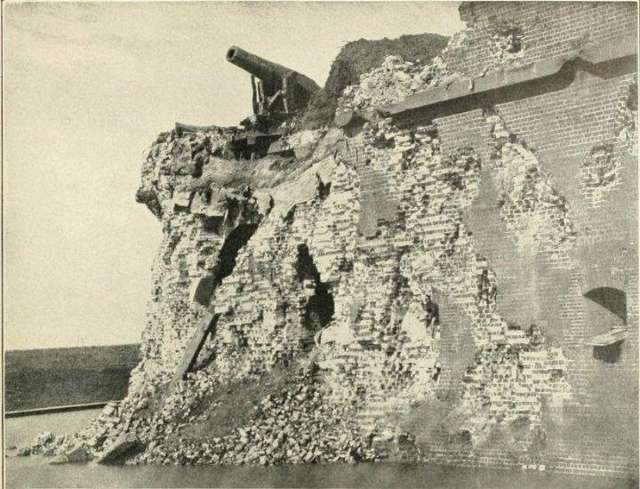
Then, 1862The damaged corner wall after the 1862 siege.Photo: Unknown · Public domain · Source · resized
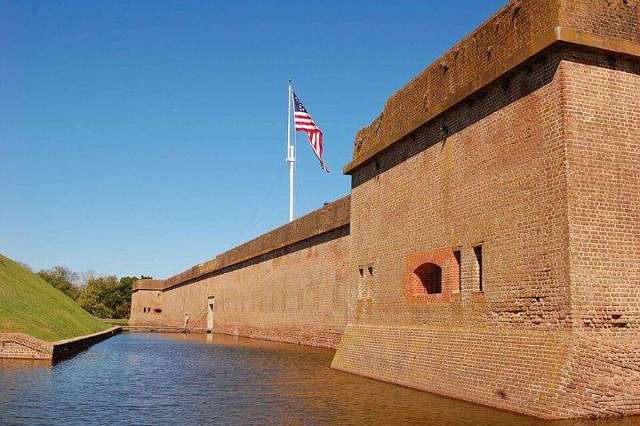
Today, TodayThe brick fort sits on Cockspur Island.Photo: Jud McCranie · CC BY 3.0 · Source · resized

The story

Fort Pulaski was built from 1829 to 1847 on Cockspur Island at the mouth of the Savannah River. It was named in 1833 for Casimir Pulaski, a Polish-born soldier who fought in the American Revolution. About 25 million bricks went into it, supported by wooden pilings sunk up to 70 feet.

As a young second lieutenant, Robert E. Lee worked on its construction under Major Samuel Babcock. Sources disagree on how thick the walls were, from about 7½ to 11 feet.

In April 1862, Union forces used 36 guns, including James rifled cannons and Parrott rifles, to breach the corner wall within about 30 hours. Colonel Charles H. Olmstead surrendered reluctantly. Only two soldiers were killed. The success of rifled cannon rendered brick forts obsolete. It became a national monument on October 15, 1924.

Did you know? Only two soldiers were killed in the siege.
Historians argue about this. Dates for the surrender differ slightly. The siege began on April 10, 1862, and a photo of the surrender room is dated April 11.

Fact or tall tale?

Sources

More: Look for historic photos at the Library of Congress

Stamp it in person

Go there, answer the question that only someone standing at Fort Pulaski can answer, and add the stamp to your passport. Free, no sign-up.

Play Savannah

More in Savannah

Next: Forsyth Park Fountain. Written from the cited sources, not yet walked on site unless noted.