Stamp the PastPlay free
Places › Flagstaff, AZ

Walnut Canyon: then and now

About 1900 vs 2004 · Flagstaff, AZ

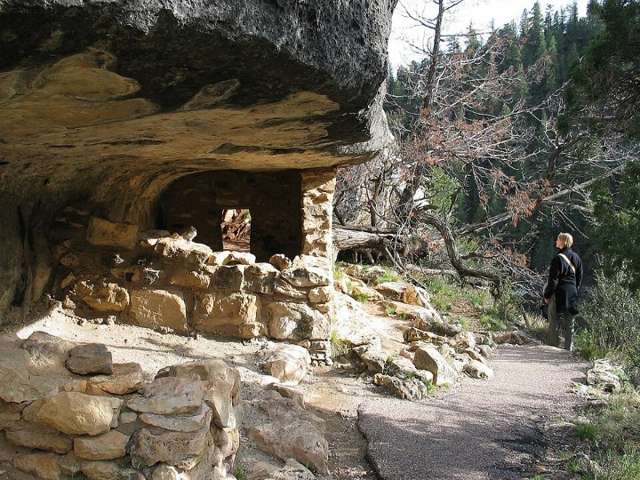
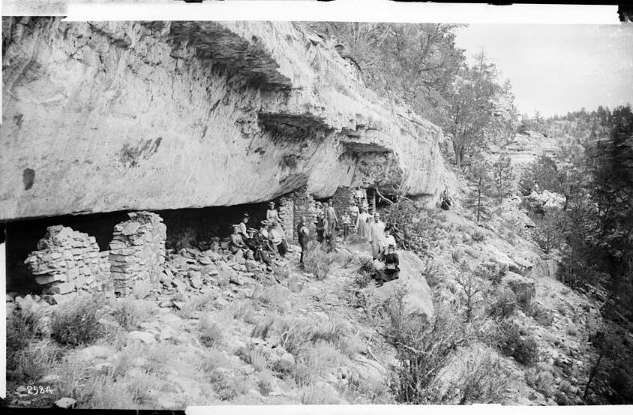
Walnut Canyon, 2004Walnut Canyon, About 1900
NowThen
Then, About 1900A black-and-white photo of stone walls tucked under a big rock overhang on a steep canyon wall.Photo: C. C. Pierce · Public domain · Source · resized, cropped
Today, 2004A stone room under a curved rock ledge, with a visitor on the gravel trail beside it.Photo: Daniel Schwen · CC BY-SA 3.0 · Source · resized

The story

Walnut Canyon National Monument is about 10 miles (16 km) southeast of downtown Flagstaff. The canyon floor is 350 feet below the rim. A 0.9-mile loop trail descends 185 feet into the canyon and passes 25 cliff dwelling rooms.

The Sinagua people lived here from about 1100 to 1250 AD. They built their homes under limestone ledges, using natural recesses in the cliff walls. A typical room might be the home of one family, about two meters high, six meters long and three meters deep. The Sinagua left more than 80 cliff dwellings, and why they left around 1250 is not certain.

President Woodrow Wilson proclaimed the monument on November 30, 1915, to preserve the ancient cliff dwellings. More than 387 plant species grow here.

Did you know? The Sinagua left over 80 cliff dwellings behind.
Historians argue about this. Many people say they know exactly why the Sinagua left. Wikipedia says they left mysteriously around 1250 and the reason is not certain.

Fact or tall tale?

Sources

More: Look for historic photos at the Library of Congress

Stamp it in person

Go there, answer the question that only someone standing at Walnut Canyon can answer, and add the stamp to your passport. Free, no sign-up.

Play Flagstaff

More in Flagstaff

Next: Lowell Observatory. Written from the cited sources, not yet walked on site unless noted.