Stamp the PastPlay free
Places › San Diego, CA

Casa de Estudillo: then and now

After 1898 vs 2010 · San Diego, CA

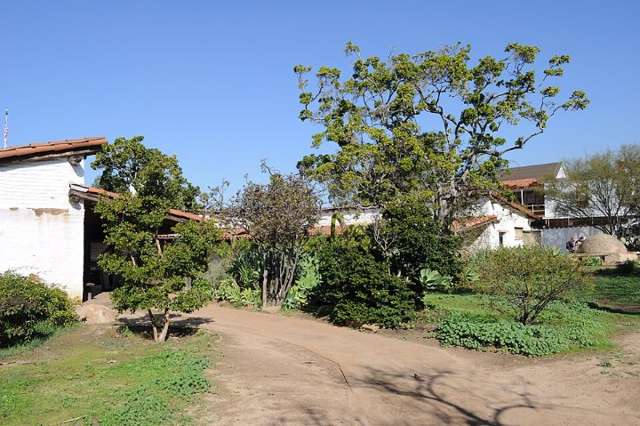
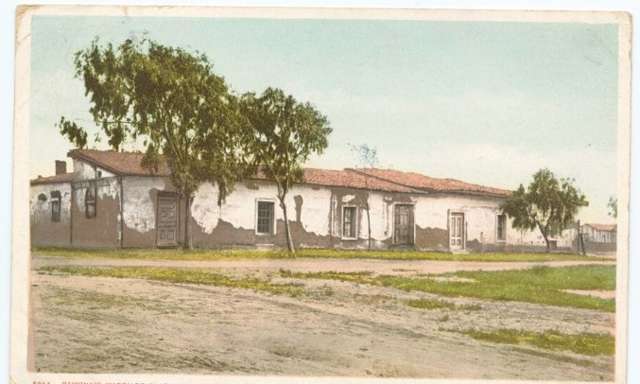
Casa de Estudillo, 2010Casa de Estudillo, After 1898
NowThen
Then, After 1898A tinted postcard of the long, low adobe house with a tree beside a dirt road.Photo: Detroit Publishing Company (scan by NYPL) · Public domain · Source · resized, cropped
Today, 2010The whitewashed walls, a courtyard and big trees.Photo: Joe Mabel · CC BY-SA 3.0 · Source · resized

The story

The Casa de Estudillo was built in 1827 by José María Estudillo and his son José Antonio Estudillo, early settlers of San Diego. It was considered one of the finest houses in Mexican California. It stands in Old Town San Diego State Historic Park and is a National and California Historical Landmark.

The Spanish Colonial house is U-shaped, 113 feet across the front and 98 feet along each wing. Its 13 rooms connect only through a covered outdoor walkway, not inside halls. A cupola on top gave a view of the plaza for bullfights and festivals.

José Antonio died in 1852, and the family stayed until 1887. Helen Hunt Jackson's 1884 novel Ramona made Californio life famous nationwide, and the house became linked with the story. Old postcards called it Ramona's Marriage Place. A restoration in 1910 removed some walls to enlarge the chapel and schoolroom.

Did you know? The rooms connect only through an outdoor walkway.
Historians argue about this. Many people think the house was built for the novel. Wikipedia says it was built in 1827, and the novel came out in 1884.

Fact or tall tale?

Sources

More: Look for historic photos at the Library of Congress

Stamp it in person

Go there, answer the question that only someone standing at Casa de Estudillo can answer, and add the stamp to your passport. Free, no sign-up.

Play San Diego

More in San Diego

Next: Hotel del Coronado. Written from the cited sources, not yet walked on site unless noted.