Stamp the PastPlay free
Places › Minneapolis, MN

Saint Anthony Falls: then and now

1898 vs Today · Minneapolis, MN

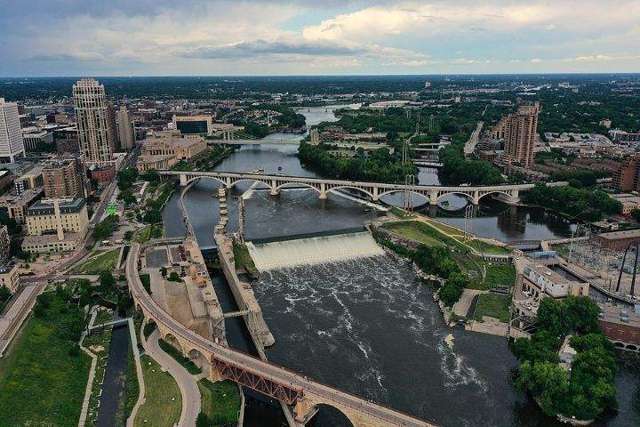
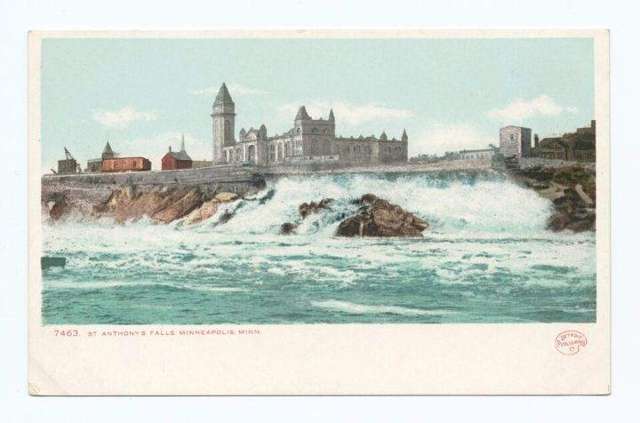
Saint Anthony Falls, TodaySaint Anthony Falls, 1898
NowThen
Then, 1898A postcard of the falls and the Exposition Building, made after 1898.Photo: Detroit Publishing Company · Public domain · Source · resized
Today, TodayThe falls drop over a wide apron beside the mill ruins.Photo: August Schwerdfeger · CC BY 4.0 · Source · resized

The story

Saint Anthony Falls was the only natural major waterfall on the Mississippi River. Father Louis Hennepin named it in 1680 after St. Anthony of Padua. The Dakota name is Owámniyomni, meaning whirlpool.

The total drop is 49 feet. The natural falls were about 35 feet and the upper dam adds about 14. On October 5, 1869, the limestone cap was breached during a tunnel project, and a concrete dike finished in 1876 fixed the damage. An Army Corps of Engineers wooden apron went in around 1880 and was replaced with concrete after it was destroyed in 1952.

Water power ran flour and lumber mills, and Minneapolis was known as the Flour Milling Capital of the World from about 1880 to 1930. The locks were completed in 1963. The upper lock was permanently closed in 2015 to help stop the spread of Asian carp.

Did you know? The upper lock was closed in 2015 to stop Asian carp.
Historians argue about this. Wikipedia says the falls was the only natural major waterfall, so some sources call it the only waterfall on the river. The natural falls no longer look natural, because the apron and dam changed them.

Fact or tall tale?

Sources

More: Look for historic photos at the Library of Congress

Stamp it in person

Go there, answer the question that only someone standing at Saint Anthony Falls can answer, and add the stamp to your passport. Free, no sign-up.

Play Minneapolis

More in Minneapolis

Next: Basilica of Saint Mary. Written from the cited sources, not yet walked on site unless noted.